
Every Modernization Erases What Came Before It
Most facilities lose critical process knowledge with every system upgrade, as control migrations and hardware replacements erase years of accumulated data. CRAWLER and Invisyne solve this together: CRAWLER preserves machine data across upgrades so intelligence grows instead of resetting. Invisyne turns it into insights that shift your team from reactive to proactive decision-making.
Data Loss Across Upgrades
CRAWLER preserves operational intelligence across system generations so nothing critical is lost when you modernize.
Reactive Troubleshooting
Invisyne enables root cause analysis in minutes with structured historical data, so your team can act on evidence.

Scattered Tools & Silos
Centralizes machine signals into a single modular, scalable ecosystem that gives your team the visibility they need.
Unexpected Downtime
Detects process deviations early, giving your maintenance team the lead time to intervene before a deviation becomes a failure.
From Machine Signal to Structured Decision
CRAWLER continuously records, stores, and organizes machine signals in real time, creating a digital memory that preserves operational intelligence across system generations. Built on top of it, Invisyne turns data into insights and recommendations that drive better. Together, they create a complete data-to-decision chain across machines, sites, and generations.
High-frequency edge capture
Captures up to 5,000 variables per second at the edge, giving you granular visibility into equipment behavior as it happens, not a delayed summary pieced together after the fact.

Built for extreme conditions
Operates reliably from -20°C to +70°C, so harsh industrial environments, from outdoor wellpads to high-heat production floors, don’t limit where it can be deployed.
Open protocol support
Connects through OPC UA, Modbus, MQTT, Siemens, AWS, and Azure, working with the systems you already have in place instead of requiring you to standardize around a single vendor.

Scalable configurations
Available in Basic, Advanced, and Pro tiers, so the platform matches your operational needs and budget today, and can grow alongside them as your facility’s requirements evolve.
What a Data-to-Decision Chain Actually Delivers
Once CRAWLER and Invisyne capture and structure your machine data, the impact shows up across downtime, maintenance, asset life, and how your team makes decisions.
20–30% Reduction in Downtime
Catching process deviations early gives maintenance teams the lead time to act before a developing issue becomes an unplanned failure.
Faster Fault Resolution
Structured historical data turns root cause analysis into a matter of minutes rather than a manual investigation built from scratch each time.
Lower Total Cost of Ownership
Preserving operational intelligence across upgrades means each modernization builds on what came before it, instead of starting the asset's operational history over.
Predictive Maintenance
Real-time visibility into machine performance shifts maintenance from reactive firefighting to planned, data-driven intervention.
No Vendor Lock-In
Open protocol support keeps your data portable across systems, so the intelligence CRAWLER builds stays yours regardless of what platform runs on top of it.

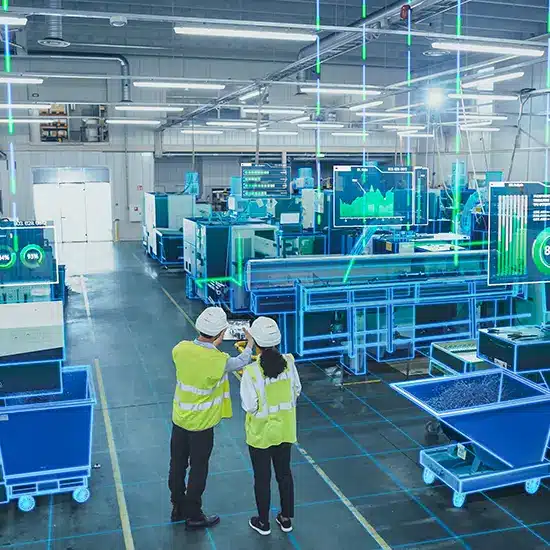
Digital Twins
See how simulation and real-time data work together to reduce commissioning risk

Oil & Gas
Explore how CRAWLER & Invisyne deliver operational intelligence for onshore and offshore operations

Common Questions About CRAWLER and Invisyne
-
What do CRAWLER and Invisyne actually do, and do I need both?
CRAWLER and Invisyne are two complementary platforms that work together to turn machine data into operational intelligence. CRAWLER is the foundation, an edge-based data capture platform that continuously records and structures machine signals in real time, preserving that intelligence across system generations. Invisyne is the Industrial Decision Platform built on top of it, transforming captured data into insights, recommendations, and actions that support better decisions across the asset lifecycle. Facilities that undergo regular modernization cycles, run complex continuous production, or want to shift from reactive to proactive maintenance tend to get the most value from running both together, though CRAWLER's Basic configuration can also stand alone for facilities that primarily need reliable data capture.
-
How does CRAWLER preserve data across a system upgrade or migration?
CRAWLER continuously captures and structures machine signals independently of the control systems it's monitoring, which means the data it collects isn't tied to any single generation of hardware or software. When a facility upgrades its PLCs, replaces drives, or migrates to a new control platform, CRAWLER's historical record carries forward rather than resetting with the new system. This is what allows a facility to treat modernization as a continuous process rather than a series of disconnected projects that each start from zero.
-
What kind of environments can CRAWLER operate in?
CRAWLER is built to operate in extreme conditions, from -20°C to +70°C, which covers the range of harsh industrial environments common in continuous production, energy, and heavy manufacturing settings. It supports open protocols including OPC UA, Modbus, MQTT, Siemens, AWS, and Azure, so it can connect to equipment and platforms a facility already has in place rather than requiring a specific vendor ecosystem. This combination of environmental durability and protocol flexibility is what allows it to be deployed across such a wide range of industrial settings.
-
How quickly can Invisyne help identify the root cause of a failure?
Because Invisyne works from structured historical data that CRAWLER has already captured, root cause analysis becomes a matter of reviewing organized evidence rather than reconstructing events after the fact. In practice, this means fault resolution that might otherwise take hours of manual investigation can often be narrowed down in minutes. That speed compounds over time, since every incident adds to the historical record Invisyne can draw on for the next one. Contact us to learn more.
-
Does adopting CRAWLER and Invisyne mean replacing our existing SCADA or control systems?
No. CRAWLER and Invisyne are designed to layer on top of existing control systems rather than replace them, capturing and structuring the data those systems already generate. For facilities without a full SCADA system, CRAWLER and Invisyne can deliver comparable real-time visibility without that scale of investment. For facilities that already run SCADA, they add a layer of continuity, predictive insight, and cross-generational data preservation that most SCADA systems don't provide on their own.
-
What's the difference between the Basic, Advanced, and Pro configurations?
The three configurations are built to match different operational needs and budget levels, scaling from foundational data capture up through more advanced analytics and decision support. A facility just beginning to build out real-time visibility might start with Basic, while one running complex, continuous production with recurring modernization cycles is more likely to need the full capability of Pro. Our team works with each facility to determine which configuration fits their current operation and where they're headed. Contact us to get started.
Ready to Stop Losing Data With Every Upgrade?
Talk to our team about building a digital memory that carries forward across every system generation.